
Last time, the filing cabinet got a public address. Today, the Context Owner finally gets a desk. It is live in the browser at esc.diuldia.com, running on our SHIELD playground.
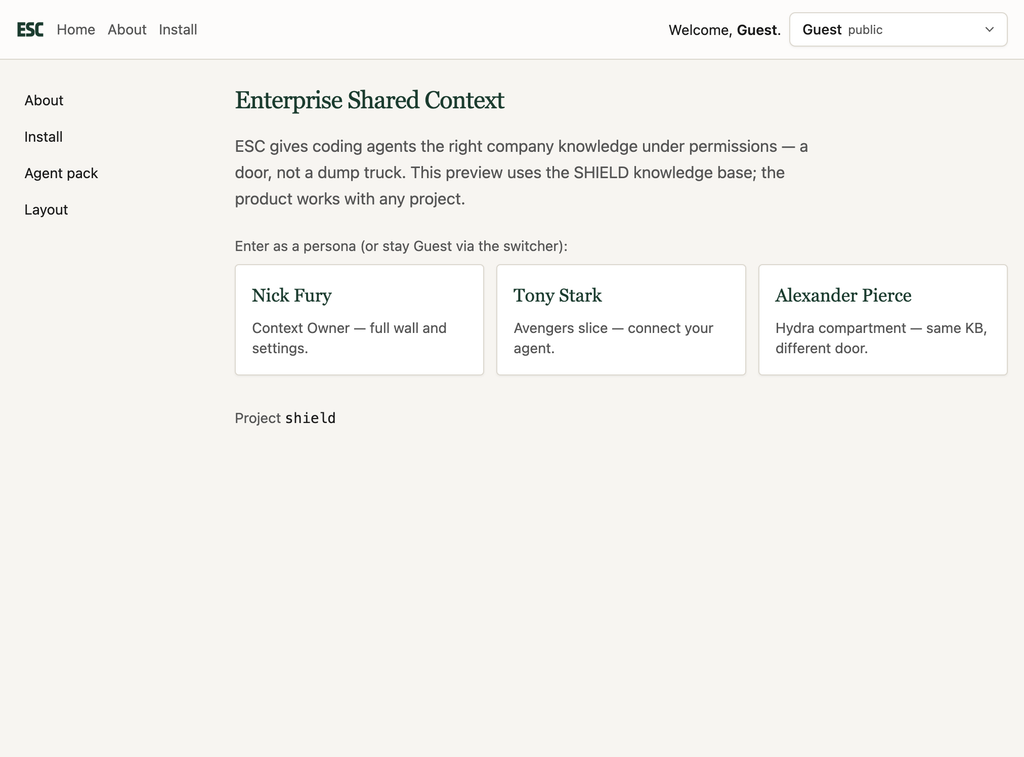
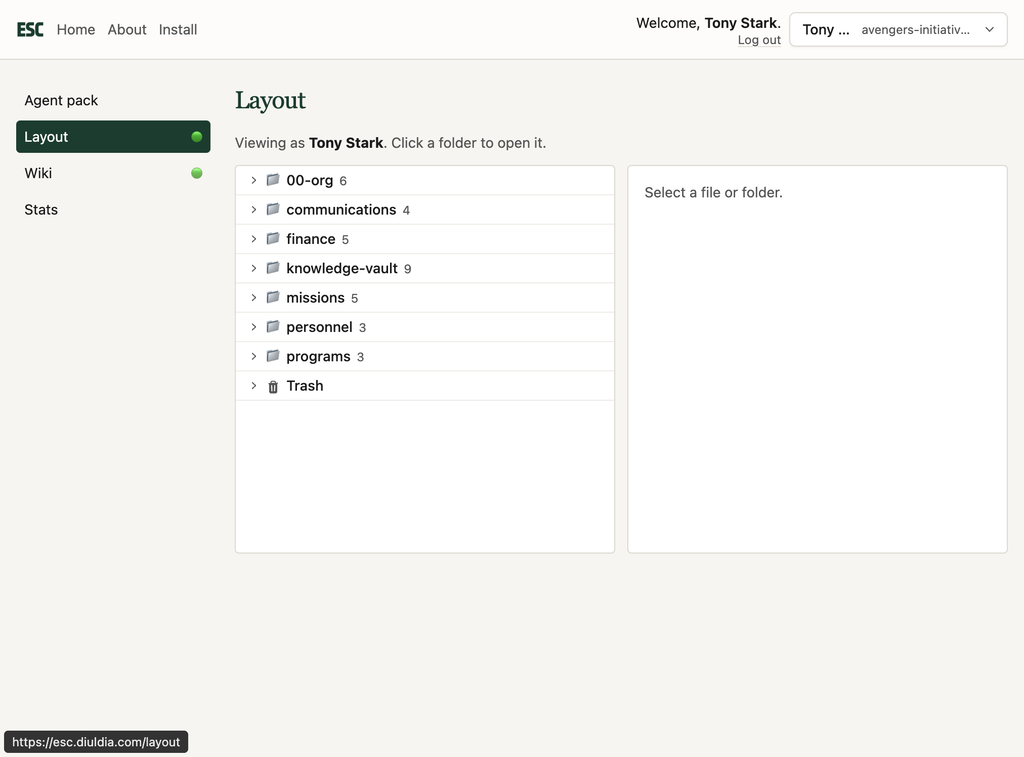
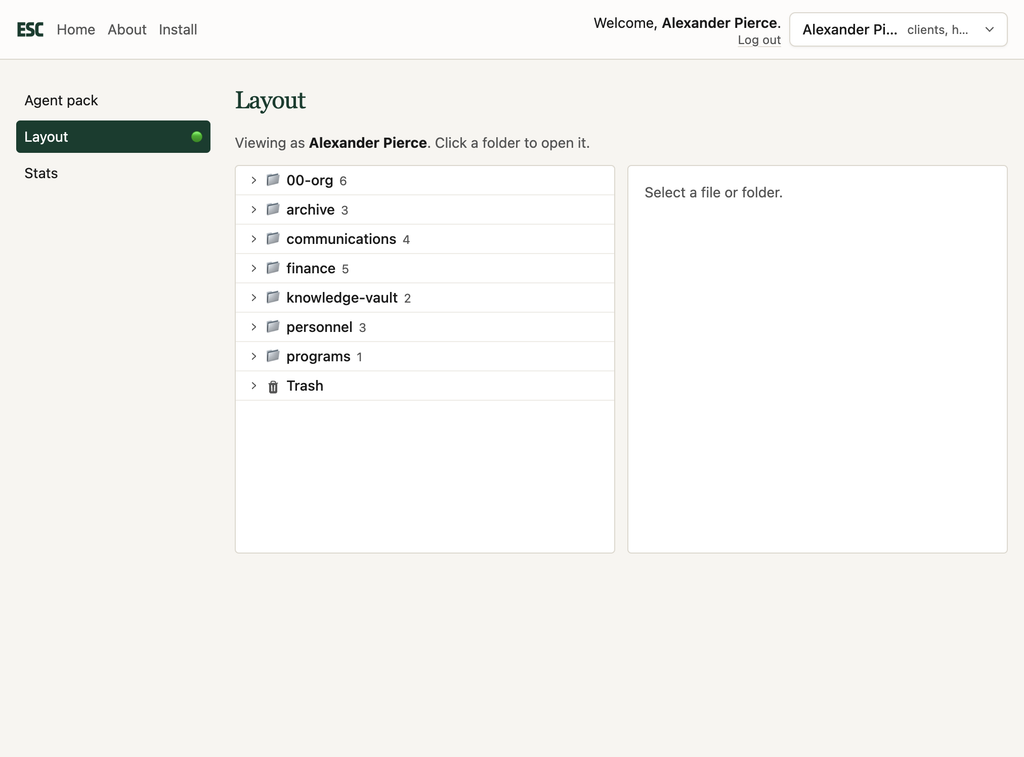
The app is built to solve the ultimate administrative panic question: “What exactly can Alexander Pierce see if he connects his AI right now?” You don’t need SSH or a terminal ritual to find out. You flip a persona switcher on the homepage. Tony Stark sees the thick building (mission logs, the Sokovia Accords). Pierce sees a thin, highly restricted slice. The walls physically shift in under twenty seconds.
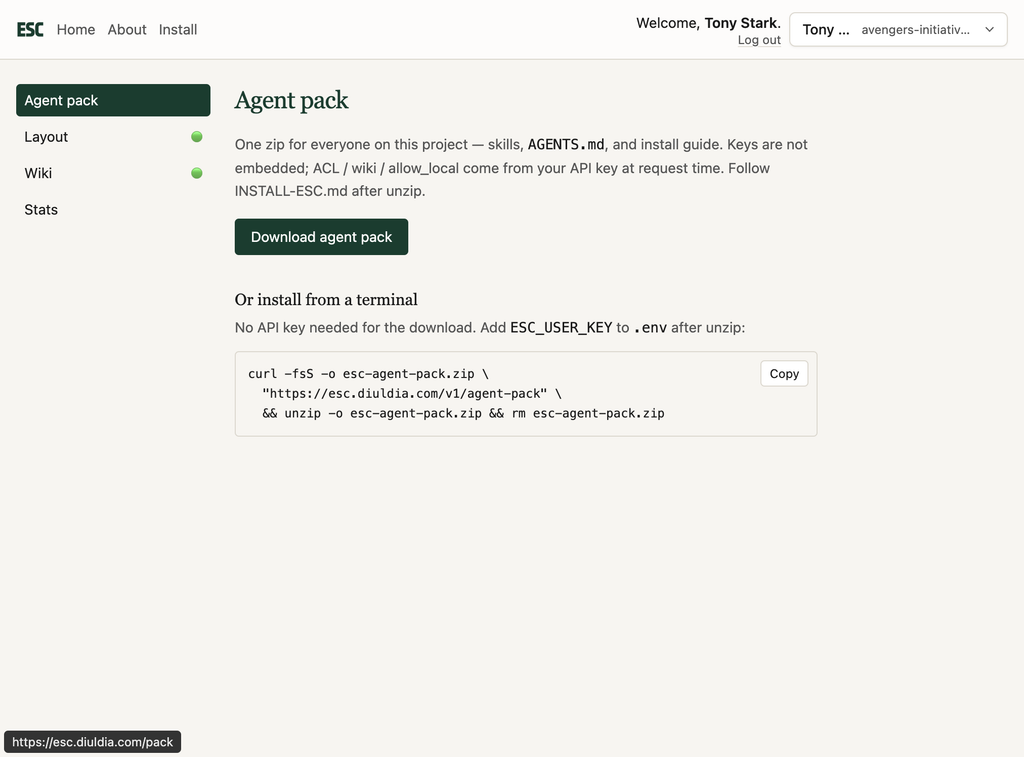
For the team, the hero feature is the Agent Pack. Instead of telling employees to “paste the Drive into Claude,” they download a clean zip file containing system instructions and skills. It gives their agentic software a doorbell and a permissioned table of contents. The AI fetches only the exact context it is allowed to read.
The desk for the job
This concludes our five-post experiment. We started with a very concrete problem: small companies have a broken collective memory. Humans learn to navigate the business through tribal gossip and Slack archaeology; AI agents learn from whatever someone blindly pasted into the chat box last Tuesday.
I wrote previously that modern teams need a Context Owner – a dedicated curator, interviewer, and guardian of the organization’s single source of truth. That essay was the job description. Enterprise Shared Context (ESC) is an illustration of what their actual workplace should look like.
Five posts was the deal. The filing cabinet has a public address. The AI has a door. The Context Owner finally has a UI.
If you want to click around the playground, it is live at esc.diuldia.com. The dummy files remain on GitHub at SHIELD. The ESC code itself stays private until it proves useful somewhere outside a fictional Marvel org chart.